
Buildaloo is our product: a game maker for kids. This guide sticks to what the American Academy of Pediatrics (AAP) and the World Health Organization (WHO) say, as checked on 13 Nov 2026, with links to every source at the end. It is not medical advice. Your pediatrician knows your child.
The short answer
- Under 18 months: the AAP advises avoiding screens other than video chatting.
- 18 months to 2 years: if you start, choose high-quality programs and watch together (AAP). The WHO says no screen time for 1-year-olds.
- 2 to 5 years: about one hour a day of high-quality programs, watched together when you can (AAP 2016; the WHO says no more than one hour of sitting screen time for ages 2 to 4, and less is better).
- 6 to 12 years: no official number. The AAP asks for consistent family limits that protect sleep, activity and time together. The WHO asks children 5 to 17 to limit recreational screen time.
In early 2026 the AAP published a new policy statement, Digital Ecosystems, Children, and Adolescents. It moves away from counting hours and asks families to look at five things instead, the 5 Cs (below).
Who this is for
- A parent of a child somewhere between toddler and 12
- You are wondering if your child gets too much screen time, or what a fair rule looks like
- You want what the guidelines actually say, not a scare headline
What the AAP says
The AAP’s best-known numbers come from two 2016 policy statements, Media and Young Minds (under 6) and Media Use in School-Aged Children and Adolescents (6 and older):
- Under 18 months: avoid screen media other than video chatting.
- 18 to 24 months: if you introduce media, choose high-quality programs and watch with your child.
- 2 to 5 years: limit screen use to one hour a day of high-quality programs, and watch with them so they understand what they see.
- 6 and older: place consistent limits on time and on the types of media, and make sure media doesn’t take the place of sleep, physical activity and other healthy habits.
The AAP’s newer guidance (its Center of Excellence on Social Media and Youth Mental Health, and the 2026 policy statement) does not set a daily number. It offers the 5 Cs of media use as questions to ask:
- Child: Who is your child, and how do they react to media?
- Content: What are they watching or playing, and is it good quality?
- Calm: Do screens help them calm down or fall asleep, and is that working?
- Crowding out: What is screen time replacing: sleep, play outside, meals together?
- Communication: Do you talk about what they do on screens?
The AAP also has a free Family Media Plan tool that walks you through screen-free times and places, device curfews and content choices.
What the WHO says
- Under 5 (2019): screen time is not recommended for babies under 1 or for 1-year-olds. For ages 2 to 4, sitting screen time should be no more than one hour a day, and less is better. When young children sit still, reading and storytelling with a caregiver are encouraged.
- Ages 5 to 17 (2020): children should limit time spent sitting, especially recreational screen time. The WHO found too little evidence to set a precise cut-off, so it gives no number.
“Recreational” means screens for fun, not schoolwork.
Screen time by age
| Age | What the AAP and WHO say | Ideas that make, not just watch |
|---|---|---|
| Under 18 months | AAP: avoid screens except video chatting. WHO: none under 2. | Video calls with family |
| 18 months to 2 | AAP: if you start, high-quality programs, watched together. | Watch together, talk about it |
| 2 to 4 | AAP: about 1 hour a day of high-quality programs. WHO: no more than 1 hour, less is better. | Watch together, then act it out |
| 5 | AAP: about 1 hour a day of high-quality programs. WHO: limit recreational screen time. | Making games for 5 year olds |
| 6 | AAP: consistent family limits. WHO: limit recreational screen time. | Making games for 6 year olds |
| 7 | Same as 6: no official number. | Making games for 7 year olds |
| 8 | Same as 6: no official number. | Making games for 8 year olds |
| 9 | Same as 6: no official number. | Making games for 9 year olds |
| 10 | Same as 6: no official number. | Making games for 10 year olds |
| 11 | Same as 6: no official number. | Making games for 11 year olds |
| 12 | Same as 6: no official number. | Making games for 12 year olds |
If you want a number for a school-age child, that is a family choice. Use the 5 Cs to pick it: start from sleep, homework, outdoor play and meals, and give screens what is left.
Making vs watching
The guidelines don’t give creative screen time its own allowance. A game they build still counts. But two of the 5 Cs, Content and Crowding out, are where making and watching part ways.
| Watching | Making |
|---|---|
| Autoplay picks what comes next | Your child picks what comes next |
| Ends when you take the device away | Ends when the thing is finished |
| “What did you watch?” “Nothing.” | “What did you make?” “Come look!” |
| Hard to talk about at dinner | Easy to show, explain and change |
A few questions that help, whatever the app:
- Did it end in something they made, wrote, drew or solved?
- Could they explain it to you afterwards?
- Did they want to show it to someone?
- Did it crowd out sleep, play outside or time together?
Making on a screen is not a free pass. It is a better trade for the time you already give screens.
Our list of the best creative apps for kids checks 12 making apps for chat, ads and purchases.
What to do instead of screen time
Ideas that don’t need a screen at all:
- Play outside: bikes, a walk, the playground, chalk on the sidewalk
- Build with blocks, LEGO, cardboard boxes and tape
- Draw or paint, then tell the story behind the picture
- Read together, or let them “read” you a picture book
- Board games and card games (they practice rules and taking turns)
- Cook or bake something simple together
- Make music: pots and spoons count
- Help with real jobs: watering plants, sorting laundry, feeding a pet
- Put on a show with stuffed animals
- Design a game on paper. Draw the hero, the world and the goal before anything is built. Our game ideas for kids page has a free printable sheet, and our guide to how kids make their own video game goes from idea to playtest.
Paper first, screen later is a good rule for creative kids: the idea is theirs before any app is involved.
Setting family rules that hold
- Pick screen-free times: meals, the car, the hour before bed.
- Pick screen-free places: bedrooms are the usual one.
- Set a device curfew: devices charge outside the bedroom overnight.
- Use the tools you already have: Apple Screen Time and Google Family Link set daily limits and downtime on the device.
- Watch or play together sometimes: the AAP recommends watching with young children.
- Talk about it: ask what they made or watched, not just how long.
- Model it: kids notice our phones too.
Where Buildaloo fits
Buildaloo is a voice-first AI game maker for kids ages 5 to 12. Your child describes a game out loud, Loo (the AI buddy) builds it, and they play it, change it and share it.
What is true today:
- It is still screen time. We’d count it.
- No stranger chat: your child talks only to Loo.
- No ads.
- A parent dashboard shows the games your child made, with an optional parent PIN.
- No daily time limit in Buildaloo itself today. Use your device’s Screen Time or Family Link for that.
For the safety questions, see our checklist for any kids’ AI app, or the wider one on safe apps for kids. For under-7s who can’t read yet, see ScratchJr vs Buildaloo.
FAQ
How much screen time should a 5 year old have?
The AAP’s 2016 guidance for ages 2 to 5 is about one hour a day of high-quality programs, watched together when you can. The WHO says children 5 and older should limit recreational screen time, without setting a number.
How much screen time is OK for a 7 to 12 year old?
Neither the AAP nor the WHO sets a daily number for school-age kids. The AAP asks families to set consistent limits and make sure screens don’t take the place of sleep, physical activity and time together. Its 2026 policy statement adds the 5 Cs: Child, Content, Calm, Crowding out and Communication.
Does video chatting with grandparents count as screen time?
The AAP’s 2016 guidance makes an exception for video chatting even for children under 18 months, the age at which it advises avoiding other screen media.
Is making something on a screen better than watching?
The guidelines don’t give creative screen time a separate allowance. They do ask about content and about what screens crowd out. Many parents find a session that ends in something their child made feels different from an hour of autoplay. It still counts as screen time.
What can kids do instead of screen time?
Outdoor play, building with blocks or cardboard, drawing, reading together, board games, cooking, music, and helping around the house. A good bridge is to have kids design a game on paper first, with a printable sheet, before or instead of building it on a screen.
Sources
Checked 13 Nov 2026.
- AAP, The 5 Cs of Media Use
- AAP, Understanding the new AAP digital media guidelines (policy statement Digital Ecosystems, Children, and Adolescents)
- AAP News, Policy addresses how to help parents manage young children’s media use (Media and Young Minds, 2016)
- AAP, Media Use in School-Aged Children and Adolescents (Pediatrics, 2016)
- HealthyChildren.org (AAP), Family Media Plan
- WHO, Guidelines on physical activity, sedentary behaviour and sleep for children under 5 years of age (2019)
- Chaput et al., 2020 WHO guidelines on physical activity and sedentary behaviour for children and adolescents aged 5–17 years
Play a game a kid made
 Story
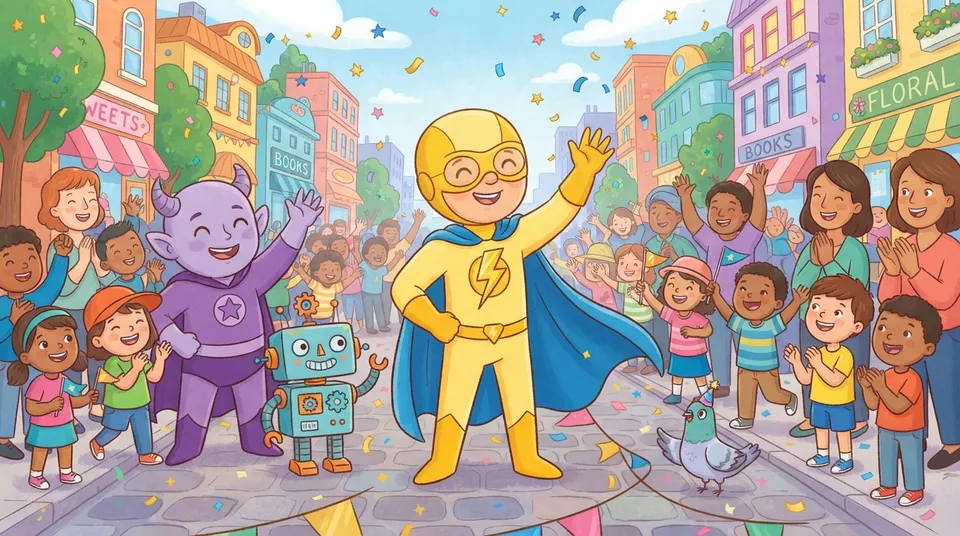
Lab Bolt: Villain Vex🇬🇧
Made by an 8-year-old
A choose-your-path story about a little lightning hero and a villain who is up to something underground. Every choice changes the ending: charge in, ask a friend for help, or invite the villain to a laser dance party.
Play →
Global Jetpack Trek🇬🇧
Made by an 8-year-old
Fly a jetpack around the Earth to find 15 hidden treasure chests, from a coral reef to a snowy peak. Grab fuel cans to fly farther and steer clear of the storms.
Play →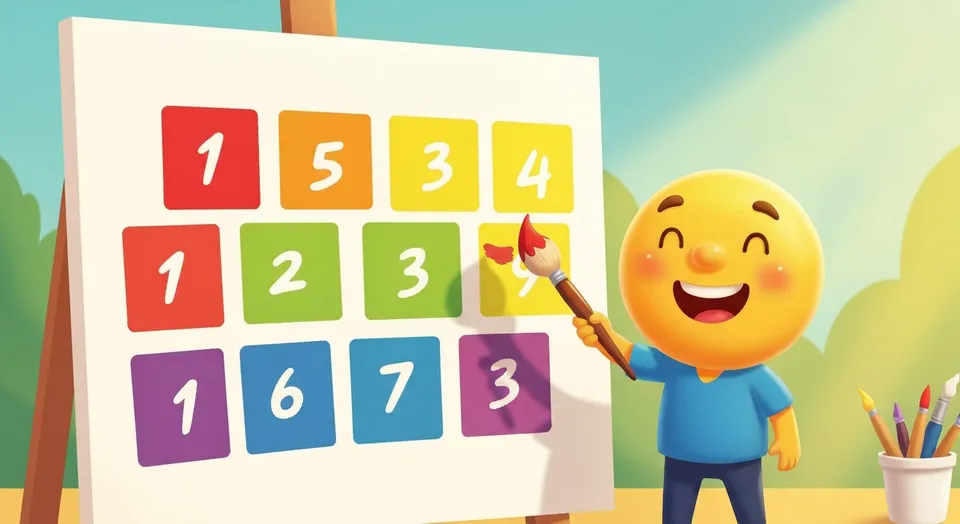 Art
Números Coloridos🇵🇹
Color by number: pick a picture, tap a color and paint every square with that number before time runs out. There are butterflies, castles, dinosaurs and more than 100 colors.
Play →